Years back, my home country struggled with the debate about the death penalty. One side argued it should be on our law books and regularly be carried out and another side argued that we should get rid of it altogether. The people who ended up shaping and tilting the final stand of the country on the matter were prison guards and officers. For some reason, many of them happen to be practicing Catholics.
They made two arguments: a religious argument, and a psychological argument. They argued that the death penalty hit at the core of their faith. It left them conflicted in their faith and they found carrying out the penalty morally irreconcilable with who they were as Catholics. The second argument was that when prisoners were brought to prison, the prison officers got to know them closely, got to learn some of their life stories, and they developed a human connection with them. Asking the same prison officers to arrange a hanging of the same people, left the prison officers devastated for a long time.
I found the religious and moral argument of the prison officers powerfully moving. As practicing Catholics, the officers did not want to continue being complicit in actions they found morally and religiously reprehensible. The officers wanted to live their faith with greater integrity – where their religious beliefs and their actions matched.
Practicing the Faith with Integrity
This Friday, the Lord, through the Prophet Isaiah addresses the question of integrity in the practice of our faith. Specifically, the Lord addresses the tension between our religious beliefs about fasting, and our outward performance. He says, you complain that “Why do we fast, and you do not see it? Why do we afflict ourselves and you take no note of it?” The Lord’s response to the complaints is that you do not approach your fasting with integrity! The words, the beliefs, and the outward actions around fasting are incongruent. The Lord said that “you treat your laborers poorly, you are adversarial with other people, you barely share any food, shelter, or clothing with those that don’t have anything. You are still holding people in chains in your heart and won’t forgive them. Is this the kind of fasting I wish? Do you call this a fast acceptable to the Lord?”
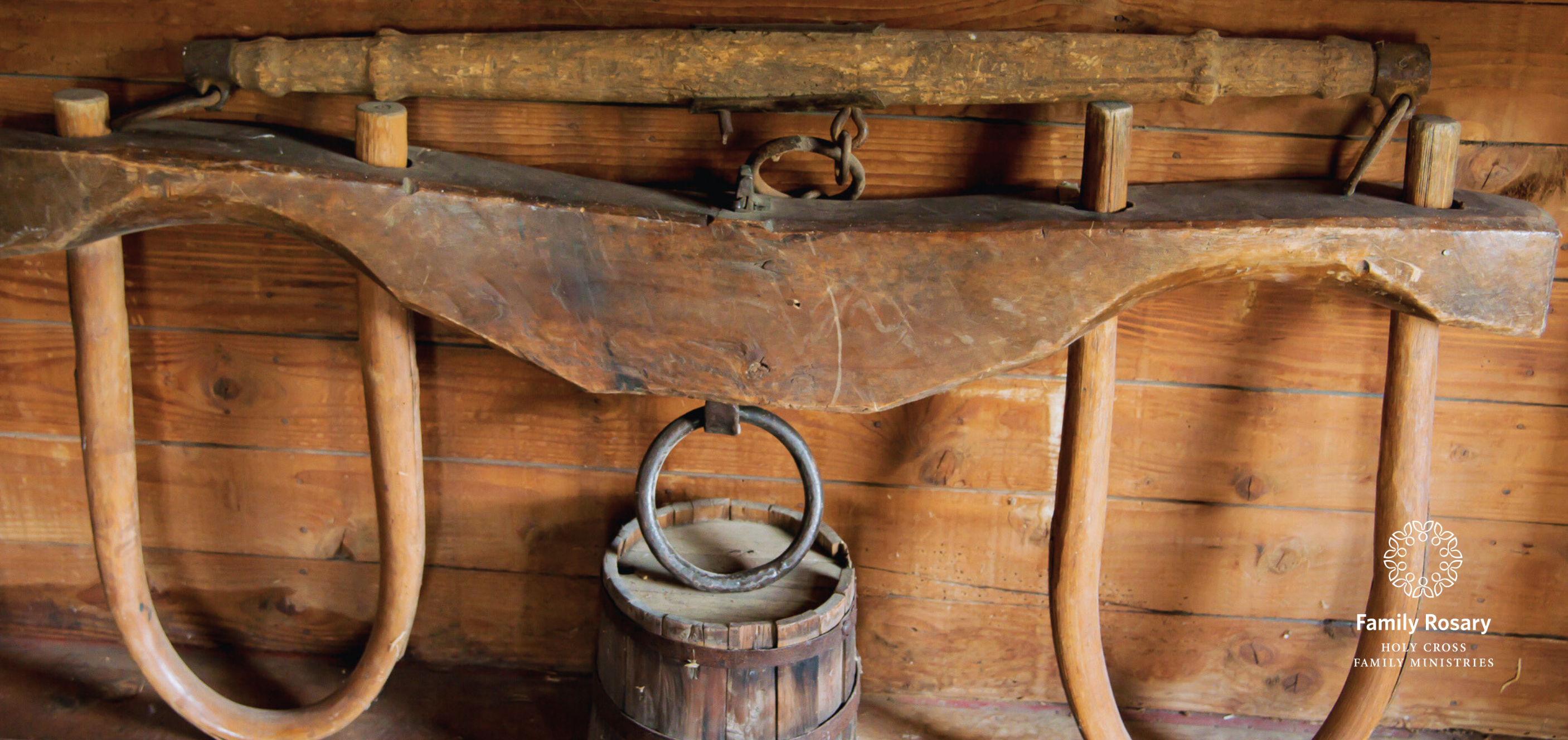
The Lord then proposes a pathway that we can consider during the fasting period – release those bound unjustly, untie the thongs of the yoke, set free the oppressed, break every yoke, share your bread with those starving, shelter the homeless – in that manner our prayer and fasting will break through the heavens and our voices will be heard.
What Are We Holding Onto?
Today we can ask ourselves: Is there someone in our past or our present we are still holding onto, someone we need to forgive or reconcile with? Is there someone in our life we didn’t or currently do not treat charitably? Is there someone we took advantage of or didn’t pay fairly? Is there someone in our life we know who can benefit from your charity?
May we ask the Lord in this Mass to give us the grace we need to reconcile our Lenten beliefs with our Lenten practices. May the Lord help us to live out our Lenten season with renewed integrity.
- Today’s Readings
- Father Fred's inspirational homily was recorded live during Mass at the Father Peyton Center this morning. You can view the Mass (and the Rosary at the 30-minute mark) on the Family Rosary YouTube page.
- To join the Rosary and Mass Livestream, visit the Family Rosary YouTube or Facebook page at 11:30 a.m. Eastern, Monday – Friday. Consider inviting others to join, too! (*If you are not a member of Facebook and a signup window appears, simply select the X at the top of the pop-up message and continue to the livestream.)