
Learn more about our faith | Holy lives of inspiration
Today's readings present a miraculous conception of two famous people in the history of the Israelite. These are Samson and John the Baptist. They carry similarity connected to their mission as announced by an Angel. They are both to be Nazirites from birth, abstaining from wine and strong drink, their mothers were barren initially and both have a mission of participating in the mission of God’s working among his people.
In the two narratives we see the working of the Divine to make what seemed impossible possible. Changing the story of these barren women, wife of Manoah and Elizabeth. There are several stories about barren women who conceive at later ages or under instruction of message of an angel. We know the story of Sarah the wife of Abraham, Rebekah who conceived (Esau and Jacob) after 20years and Rachel who struggled with infertility but eventually gave birth to Joseph and Benjamin. The angel is always conveying God’s message with a purpose. Barren was conceived sometimes as if God was withholding blessing from his people or as punishment. Sarah saw her barrenness as “Yahweh who had prevented her from bearing children (Gen 16:2).” Hosea writes that “the days of punishment has come,and Yahweh will guarantee that Ephraim as Nation will experience no birth, no pregnancy and no conception (Hos 9:7; Hos11).”
Also, barren was kind of preparation for birth of a miraculous divinely chosen male with mission as leaders. For instance, we have the births of Isaac, Jacob, and Joseph. Today’s readings present Samson and John the Baptist. Let us understand that those who were barren experienced extreme social challenge or stigma. Sarah offered her maid to bear a child as scape goat from stigma. The most important thing is that God changes their stories. The story of wife of Manoah and story of Elizabeth is renewed.
The wife of Manoah does not ask any questions from the angel but keeps quiet and tells her husband. However, Zechariah questions the possibility of birth of John the Baptist and so he becomes mute until the child is born. There are several things we can draw from these texts.Firstly, our current human situation cannot be entirely bound as the ultimate end. Barrenness is an impediment to regenerate spiritually and emotionally or any other human growth and development in different aspects. Let us remember God does not abandon his people. Our stories can be changed by God.
Spiritual barrenness is been unable to bear fruit in life for spiritual growth. This is an incapability to grow my faith. Or being unable to receive fruit of faith stemming from my belief in God. These fruits born from our faith are joy, peace, love, patience, forgiveness, kindness, and others. Let us ask ourselves, am I spiritually barren? Do I need to bear these fruits for myself and my family? This is possible through our faith in God and trusting in Divine will.
Emotional barrenness is incapability to associate freely or to accommodate fellow human beings. It can also be unable to open up for others into my life due to fear, doubt or betrayal. A friend of mine told me “Nowadays it feels like a scam when someone is good to you.” In the wounded world we need to invite God to take away our emotional barrenness. Am I emotionally fruitful to my family? We need these so that Christ can be born in our families.Secondly, believe in God always no matter the situation.
It is through our faith that God’s mission is accomplished. The angel tells Zechariah “Do not be afraid because your prayer has been hard.” Many times, when engulfed with difficulties we may have a feeling of giving up prayer or giving up our good deeds. We ought to remain with God. Prayer is a consolation especially in times of difficulty or dilemmas. These prayers are accompanied by faith. We ought to pray without doubt of faith. In every prayer we encounter the Divine and therefore, we are supposed to do it with faith. The times you pray the Rosary with your family, the times you attend mass and the times you take to have a moment with God, let us do it with sincerity of faith like Mary and not to doubt like Zechariah. Amen
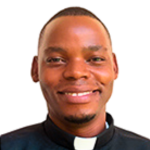
Father Joachim Nganda, C.S.C., is a young priest from Kenya. After completing placements at parishes in East Africa, he has been assigned to Holy Cross Family Ministries in North Easton, Massachusetts, while also pursuing a Master's Degree in Marketing and Communications at Stonehill College.