A few years ago, scientists placed sensitive, sophisticated microphones near tomato plants. They discovered something astonishing: plants under severe thirst or injury emit rapid ultrasonic popping sounds. Human ears cannot hear them, but the plants are not silent.
A thirsty plant may look perfectly respectable in its pot while quietly producing distress signals beyond our range of hearing. This explains many houseplants. They were not dying peacefully. They were screaming for weeks while we stood beside them saying, “That is strange. What's wrong with it, I watered it sometime around last Easter.”
Hearing What Others Ignore
Jeremiah is the sensitive microphone of Judah. He hears what others cannot or will not. He hears the land crying beneath the drought. He hears wounded families, empty fields, frightened farmers and a nation whose spiritual roots have begun to collapse. While others continue with business as usual, Jeremiah says, “Let my eyes stream with tears day and night.”
Most of us have become skilled emotional accountants. We calculate exactly how much concern a situation deserves. If it is our problem, it is a tragedy. If it is somebody else’s, it is unfortunate. If we caused it, there were many complicated circumstances. If another person caused it, we request a full investigation.
Suffering with Others
Jeremiah does not protect himself that way. He allows the pain of his people to enter him. He does not stand above Judah saying, “I warned you.” He stands among them saying, “We have sinned.” He includes himself in the confession, although he has spent years opposing the very sins he confesses. Holiness is not always standing apart from guilty people. Sometimes holiness is loving them enough to stand beside them before God.
When a child makes a serious mistake, a good mother does not say, “Excellent. This confirms my earlier assessment.” instead She grieves, worries, prays and somehow carries inside herself a wound she did not personally create. Love makes another person’s suffering our own.
Regret vs. Repentance
Jeremiah also teaches us the difference between regret and repentance. Judah is sorry because the wells are empty. Many of us become spiritual when consequences arrive. We ignore God during the party and call Him during cleanup. We pray, “Lord, remove this difficulty,” while God may be asking, “Will you remove what created it?”
We often want peace without apology, healing without truth, a stronger marriage without changing our tone, healthier families without putting down our stubbornness. We ask God for rain while continuing to worship whatever dried the land.
Merciful God
Yet Jeremiah still prays. Not because the people deserve rescue, but because mercy is part of God’s character. “Remember your covenant with us.” It is a daring prayer: “Lord, when there is nothing admirable left in us, remember what is faithful in You.”
Jeremiah invites us to recover a heart that can hear: the loneliness hidden beneath someone’s anger, the exhaustion concealed behind efficiency, the silent distress of a family member who keeps saying, “I’m fine.”
The Start of Grace
Grace often begins when we stop asking, “Why are they behaving like this?” and begin asking, “What pain am I not hearing?” A saint is not necessarily the person with all the answers. Sometimes the saint is the one whose heart has not gone deaf.
- Today’s Readings
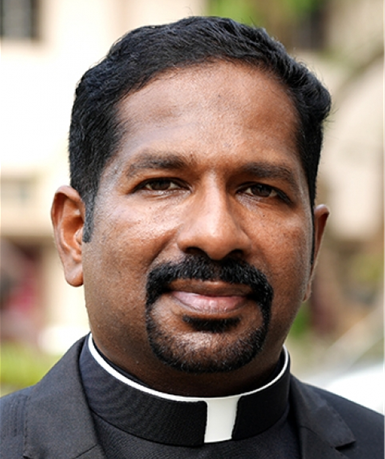
- Father Boby's inspirational homily was recorded live during Mass at the Father Peyton Center this morning. You can view the Mass (and the Rosary at the 30-minute mark) on the Family Rosary YouTube page.
- To join the Rosary and Mass Livestream, visit the Family Rosary YouTube or Facebook page at 11:30 a.m. Eastern, Monday – Friday. Consider inviting others to join, too! (*If you are not a member of Facebook and a signup window appears, simply select the X at the top of the pop-up message and continue to the livestream.)